


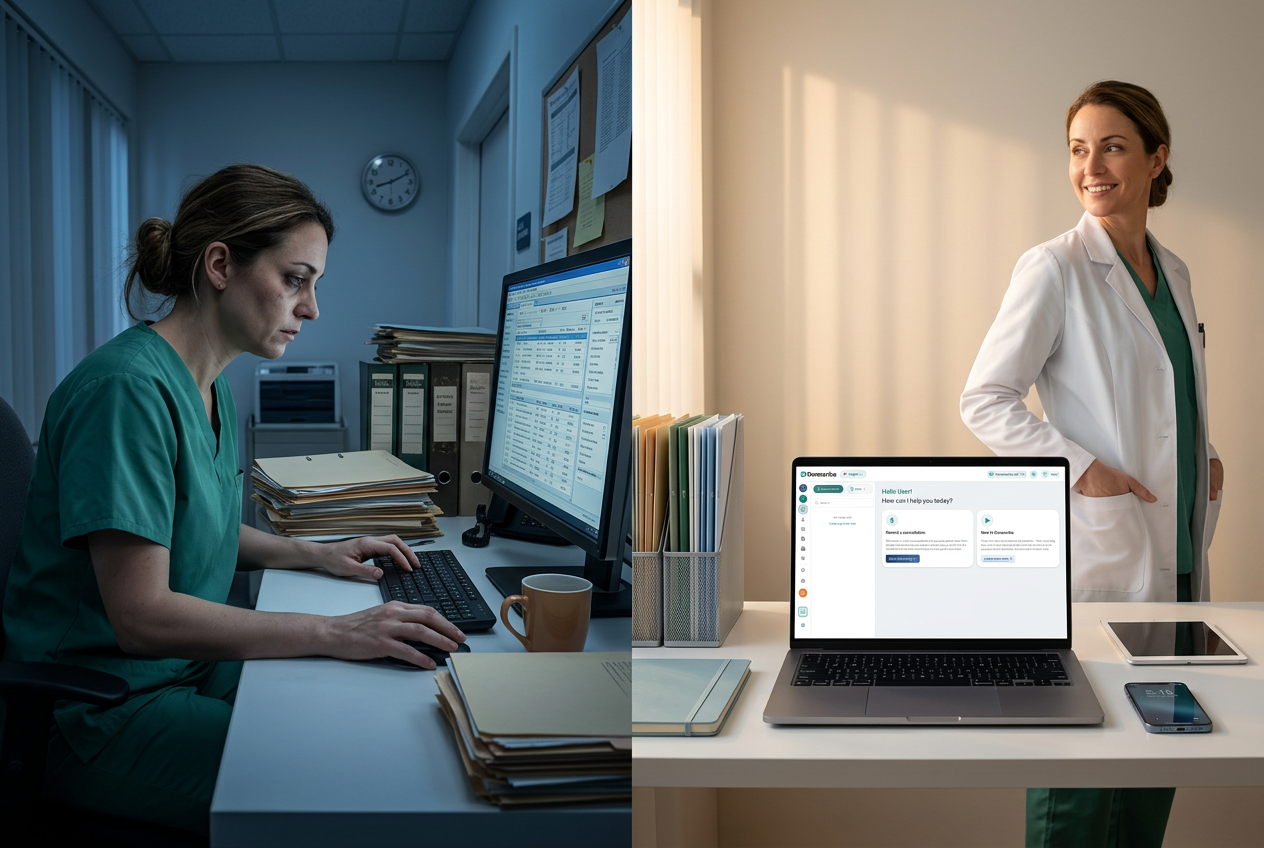
Dealing with paper clinical records takes hours that caregivers might otherwise spend in direct patient meetings. Long after a clinic closes, charts negatively affect general job happiness and cause needless cognitive fatigue. Using smart digital solutions helps doctors easily keep correct patient records and helps to avoid tiredness.
Using an automated artificial intelligence AI medical transcription software solution helps medical practitioners quickly turn natural patient conversation into formatted material. This technology works easily with Electronic Medical Record systems. Eliminating administrative obstacles helps caregivers to simplify documentation processes, improve coordination, and maximize daily operational effectiveness throughout healthcare environments.
Changing Patient Care with Medical Platforms Using AI Dictation Software
Modern hospitals have growing administrative demands that impede treatment delivery. Using an artificial intelligence dictation program for medical notes enables doctors to produce accurate progress reports right after every consultation. This deliberate change guarantees great clinical accuracy across all official medical entries and helps to lower reliance on hand typing.
Quick record generation usually results in lost diagnostic information and formatting mistakes in patient files. Automated recording technology precisely captures important conversation background, hence enabling multi-specialty care teams to access trustworthy clinical data. Simplification of chart upkeep helps to guarantee that patient histories are always thorough, coherent, and easily accessible for continuous treatment.
Modern Ambient Listening Tools’ Main Features
By naturally processing patient-provider interactions, ambient listening technology obviates the need for strict verbal dictation. Smart transcription programs automatically arrange important medical information into structured note templates and filter out conversational filler. Clinicians keep direct contact and connection with patients without stressing computer displays.
Immediately following patient visits, consultation summaries are produced noting diagnostic information. Automated processing precisely records difficult medical language, medication dosages, and treatment schedules. Getting rid of screen distractions during visits helps to build more trust between patients and practitioners, therefore improving long-term clinical results.
Modifying Automatic Summaries for Different Medical Fields
Various medical fields call for certain record formats, diagnostic measures, and reporting styles. Whereas specialists require bespoke progress templates geared to particular clinical needs, primary care doctors typically depend on normal SOAP notes. Flexible transcription solutions satisfy these specific formatting requirements easily across many working clinical contexts.
Every patient visit causes automatic generation of organized notes and standard follow-up guidelines. Specialized care divisions precisely record sophisticated diagnostic indicators and tailored treatment regimens. Emergency care providers quickly handle many patient interactions, keeping emergency rooms running smoothly.
Flexible software templates help to maintain entire compliance of clinical documentation with current healthcare standards and help to avoid formatting problems. Intelligent transcription systems readily fit current procedures and provide customized reports addressing particular company needs. Standardized formatting guarantees that external auditors find every record professional, complete, and completely readable.
Incorporating Systems to Help with Interdisciplinary Coordination
Direct integration of transcription tools into Electronic Medical Record systems does away with laborious copy-pasting between several software programs. Direct data synchronization automatically updates patient charts, therefore lowering administrative burden for overworked clinical personnel. Perfect system integration enables medical companies to maximize daily paperwork procedures and preserve data integrity.
Long after clinic closing, care providers don’t have to finish administrative chores. Always updated charts help companies with regulatory audits, make insurance processing easier, and help to keep care going. Correct, easily available medical records help every member of the care team to remain completely updated on patient treatment progress.
In sophisticated healthcare environments, main doctors, specialists, and nursing staff must communicate quickly. Late paperwork delays group decision-making and unnecessarily prolongs treatment schedules. Fast, computerized note delivery guarantees that all caregivers stay in line on patient treatment objectives throughout recovery.
Immediately following consultation, updating patient records gives attending doctors real-time insights without compromise. This common openness maximizes long-term patient health outcomes, stops duplicate medical tests, and helps to better coordinate care. Digital chart synchronization helps to keep growing networks of care running well across several departments.
Automated Processes: Maintaining Patient Data Confidentiality
When deploying digital healthcare solutions in real clinical settings, maintaining strong data privacy is vital. Strict access policies, safe cloud infrastructure, and enterprise-grade encryption are used by top documentation systems to safeguard patient records. Complete adherence to worldwide privacy rules ensures that sensitive medical information is kept safe from unauthorized exposure.
Knowing patient information is kept safe from illegal access, clinicians can reliably employ automatic listening systems. Built-in security measures guarantee safe data retrieval, storage, and transfer throughout linked healthcare systems. Good data management helps to strengthen the vital bond of trust between providers, patients, and healthcare administration during daily care.
Reaching Long-Term Practice Viability
Scaling a busy medical practice without aggravating administrative overload calls for effective digital automation tools. Reducing manual charting obligations helps doctors to see more patients while upholding excellent standards of treatment. Improved operational efficiency helps to support sustainable practice development free of patient satisfaction or provider well-being.
Preventing administrative burnout helps clinical teams to have better job satisfaction, staff retention, and general healthcare delivery. Medical experts with less time spent on paperwork keep a good work-life balance. Investing in smart documentation solutions helps to create a resilient, effective, and patient-focused healthcare environment that can grow over the long run.
Finally
Healthcare professionals’ daily clinical output and personal well-being are significantly affected by the voluminous paperwork load they must manage. Automated transcription software helps to simplify administrative chores, improve chart accuracy, and safeguard patient privacy. Improving paperwork procedures helps doctors to maximize their time providing great patient care and minimize their manual data input burden.
